Why Not to Lower the Voting Age

The voting age has been a discussion in many political settings. Even in environments of education, teenagers are becoming more aware of this matter. Some believe they should be able to vote, and others don’t even consider such topics to be important. When looking at the facts, most of them lead to not changing the voting age. 

It is actual none sense to argue that the voting age should come down to 16 ! It is outrageous that in our country the voting age is already at 18. A 17 year old does not pay taxes, and is not affected by legislations. Though an 18 year old is fully affected by the laws and legislation. The voting age is an arbitrary legal standard, though it still respects high school graduates to have the full opportunity to be versed into US government and become a us citizen with complete rights. The last time the voting age has changed was when there was a logical and serious reason for 18 year old soldiers fighting in Vietnam to have the right to vote for their leaders. 

When arguing maturity, one can say that there is no difference between the level of maturity in an 18 year old and a 17 year old. That 17 year are affected by laws that include driving or drinking. 

If we will argue this point that there is no difference of maturity between 17 year old citizens and 18 year old ones. The simple answer is there is no maturity till the age of 25, when the brain has fully developed its prefrontal cortex, and therefore the voting age should be then. This is not the case is this country because the government understands the true difference between 18 and 17 year olds and when their involvement in government is needed. In reality, every other legal age threshold has been increasing not decreasing. Take for example the legal age to drink is 21 and the legal age to drive without an adult is 17 and 18 in stress of 16. 

To conclude, lowering the legal age of voting is a decision that will do more harm than good. There is no valid reason to do so. The argument of maturity is not a reasonable one and many points prove against it. Leave the system as it is. Including minors will only put voting into risk.

Lowering the Voting Age to 16 is a Bad Idea!

This post frameworks different policy disagreements and arguments about lowering the voting age to Sixteen. I feel the opposite about bringing down the democratic age to 16. As I would see it, 16-year-olds are basically not prepared. They can participate in political exchanges or join an ideological group; in any case, the privilege to cast a ballot is excessively significant and too huge of an obligation to be practiced at 16 years old.

Many countries are choosing to lower their voting age. A few examples from a review by the U.S. central intelligence agency stated that Austria brought down the democratic age from 18 to 16 out of 2008. Ireland has permitted 16-year-olds to vote since 2012. These political groups have various thoughts on how society ought to be sorted out. These various thoughts are worked around what people value. In America, for instance, the Republican has different thought regarding what a well-working society looks and changed qualities they care about. it is the same in Ireland, so it is important to spend in a couple of more years developing a thought of what the government concentrates on supporting. Your thoughts on this can just completely create and develop through experiences which happen normally after some time, and which create as people develop in those two important years before adulthood. So, what are the cons of taking this across the nation?

 I have heard individuals argue that the democratic age ought to be brought down to 16, while at the same time challenging that the ages for buying liquor and tobacco ought to be kept at 16 because drinking and smoking are unsafe uses. Be that as it may, on the off chance that you cannot trust a sixteen-year-old kid to settle on a serious healthcare decision all alone, why enable them to choose the eventual fate of the whole nation? how will they decide the future of the entire country?

When considering bringing down the democratic age, one must think about what is truly on the brains of adolescents around the nation: Prom, secondary school, companions… and voting? Generally, 16 and 17-year-olds are still kids living at home and going to classes. There is sufficient weight on them as of now. Just imagine the online flood of political promoting that they would face. Sixteen years old kid’s vote are likewise bound to be powerless to impact by their parents. Parents or teachers or someone close to this sixteen-year-old kid will tell you their opinion and this kid might have his own opinion too but knowing their opinion would be thought you changed your mind on that matter and especially as a 16 years old, this is going to be a very strong thing as you get older you learn to know what your own opinions all but for instance teachers in private schools perhaps maybe more to likely to be right-wing. So, you will get many more children who are in private school voting right-wing because all the surroundings are voting for the right-wing. They won’t be able to know their minds and they won’t be able to decide for themselves and not have someone else’s opinion.

The way that individuals at 16-17-years of age don’t have the enthusiastic or mental development like someone who is 20-years old. Their brains are still excited and crazed with the synthetics of being a young person, because at age 16 many teens leave home for the first time, either for college or a job. So, they find themselves in front of community that they do not know very well. And that makes it harder for them to find out about their new network’s democratic rules, issues and principles.

To conclude without a doubt not absurd to contend that people underneath a particular age are substantially less likely to be prepared to vote. They end up in a society and network they know nothing about. And that will make it firmer for them to recognize and differentiate between their new network’s democratic principles and issues.

Lowering the Voting Age to 16: Necessary Process

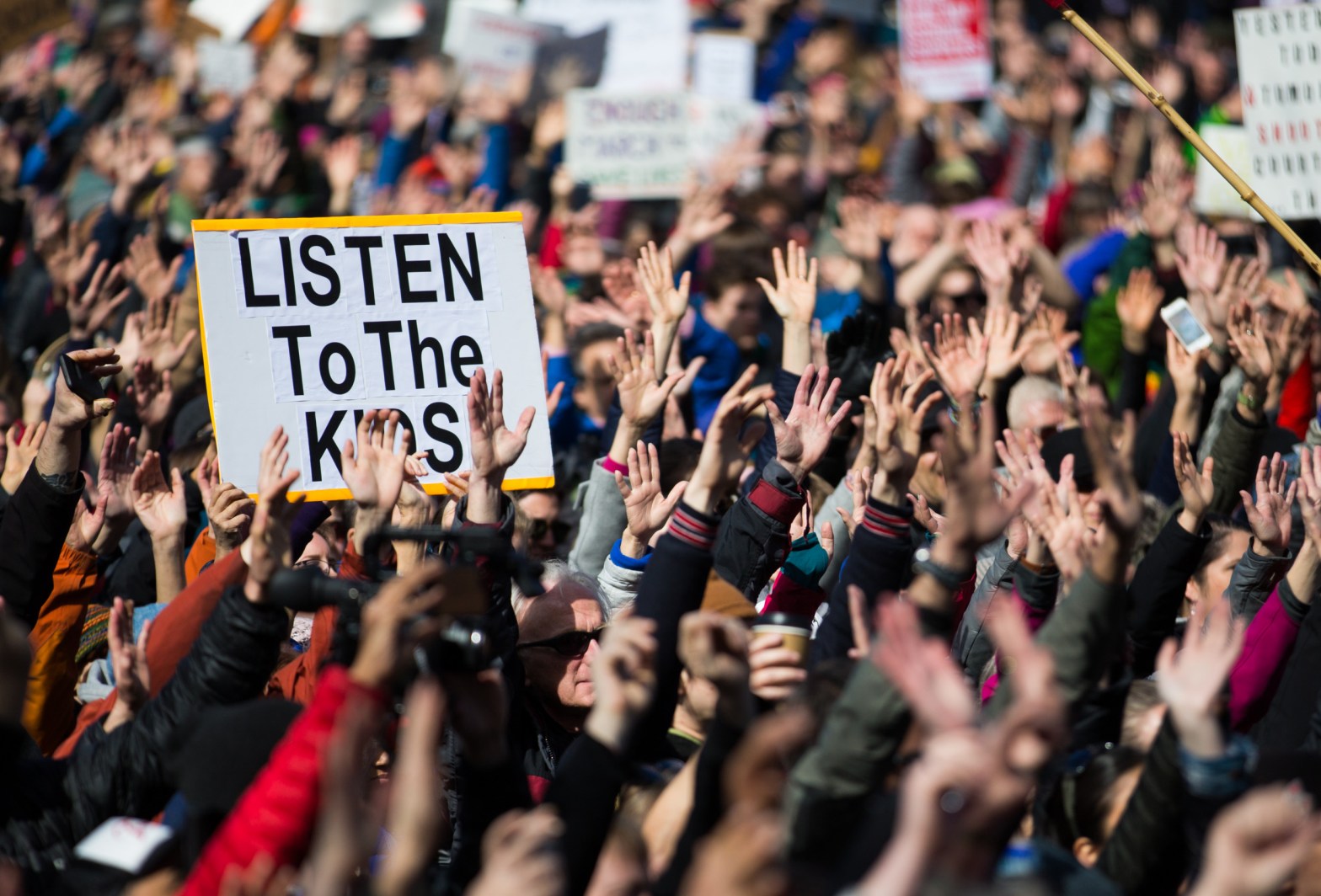
Since 1990s till now, some of the voted officials in the US states have tried to make unsuccessful attempts to lower the voting age to 16.  After a shooting that has happened at Marjory Stoneman Douglas High School in Florida, student activism started to ask for their right to vote, and lowering the voting age to 16, enticing the debate’s outburst again, especially that the US is facing new elections in 2020. There are about 20 countries that already lowered the voting age to 16, but the US does not grant this right till the very present. Some people believe that lowering the voting age would benefit the country, while others believe that a 16 year old citizen will not be able to wisely vote for what he or she chooses. 

Scientists who support the lowering of the voting age to 16 state that those 16 year olds have the same ability as older voters to make good voting choices, as they acknowledge the civics and laws of their country, have political skills that help them participate in choosing their representatives, and are learning about government and civics in schools. Citizens who support lowering the age also believe that this will increase the voter turnout, and make voting a habit for everyone in the future. It is believed that the 16 year olds have the right to vote because they should be granted the right to shape their future and choose their representation regarding problems they face, such as climate changes and school shootings.

On the other hand, the majority of the American citizens believe that 16 year olds should not be given the right to vote. According to a twitter poll, it was found that only 18% supported lowering the age to 16, while 77% were against. Citizens who are against the idea consider the 16 year olds as immature kids that do not have the right to participate in voting.  The poll participators believe that these kids will be influenced by their parents’ decisions, deeming them not be more than minors who copy their parents’ voting choices.

There are counter arguments that refute the advantages of giving the right to 16 year olds to vote. There is a study that states that people aged from 18 to 24 have the lower voter turnout numbers; because they are not mature enough to know the importance of placing their opinion. It was stated that 42% of the US population participated in the 2014 midterm election, and only 12.5% of 18 year olds contributed in voting. It was also stated that throughout the past 30 years, voter attendance for 18 to 29 year olds has never beaten the 21% in a midterm election.  So if citizens who are aged from 18 to 24 do not help in increasing the voter turnout, therefore the 16 year olds will not help in doing so; because they are not prepared to vote until later in life.

In conclusion, the debate of lowering the voting age to 16 is still under consideration, but there is still no action taken towards this yet.  There are minor numbers of citizens who believe that lowering the voting age to 16 is necessary, because the supporters believe that 16 year olds reached a level of maturity that gives them the right to vote, and are facing threats that will affect their future, while the majority believes that 16 year olds are still immature enough to participate in voting. Moreover, the struggle would still persist as further progress is anticipated to deem the granting of the right to vote possible and convincing to the public.

No, They Should Not Lower the Voting Age to 16

Voting age is the standard age that is established by law or government that a citizen must reach, in order to vote in public elections. Until World War II (1939-1945), all countries’ voting age was 21 or higher. Then, many countries -especially in Western Europe- lowered the voting age to 18, such as UK, USA, and Canada. At the end of the 20th century, 18 years old became the most common voting age. Throughout 2000, some countries began to think about reducing the voting age to 16, it developed to be an argument between those who agree and who do not. This post will be arguing the idea of lowering voting age to 16 and refute the counter-claim which is that they should vote because they pay taxes, as teens at 16 years old are not mature enough and law does not see them as adults, they can be easily manipulated.

            Since 1990s till now, some elected officials made an unsuccessful movement to reduce the voting age to 16 in several states in U.S.A, stated by Student activism in the wake of a Feb. They have to fail every time because of many reasons; teenagers under 18 do not have sufficient maturity to vote, as they lack knowledge, experience, political interest and history, Ms. Braceras wrote. As some students do not know their U.S. senator nor how to amend the Constitution. So, they will easily vote like their parents -Just like the religion and the football interest, teenagers tend to follow their parents-. Matthew Clayton assumed that researches proved that their brain is still under developing and changing, which will not allow them to consider dilemmas and take rational decisions in politics.

People who are with the idea of lowering the voting age to 16, claim that people at 16-years-old are interested in politics just like the adults and claim that many citizens agree that they have a vision that will make them vote in the next 2020 elections in U.S.A. They also see that the age of 16 is when people’s relationship with the law changes as they often start driving and paying taxes, so how young people under 16 are expected from the law to pay taxes just like adults and not vote (Eric Zorn). They also see that they should have the right to vote and have an opinion in who runs their society and country, as they believe that they are the ones who will live in the future with the consequences of decisions being made right now.

            Considering the many political events that happen nowadays and may affect the youth, their argument is claiming that people under 18 will make a difference in 2020 if they participated, while the fact is that a recent poll was done about this and the results were 75% of registered voters opposed the voting of 17-year-olds and 84 percent opposed it for 16-year-olds, which means that the majority see that people under 18 are not seen as adults that can make a serious decision such as voting. They are recognized as kids not adults, therefore, military and marriage age are 18 not 16. Representative Mark E. Green said “We do nott allow a 16-year-old to buy a beer, and the decision making is because of their ability to reason at that age”, and added that on the other side people want to let a 16-year-old decide the future leader of the country, which makes no sense”. And about the taxes issue, instead of lowering the voting age to 16, people under 18 generally do not, or should not pay taxes, and a better solution is for those that do not pay income taxes also not have the right to vote.

As expressed, after 50 years of changing the voting age from 21 to 18 after the Second World War, many people argued and still arguing about lowering the voting age to 16. This idea should not be completed; because young people at 16-years-old are not mature enough, as they have lack of political information, history, and interest, and would vote for whoever their parents will vote for, because they are kids and scientists proved that. The counter-claim that argues that as the young people under 18 pay taxes, they also should vote is non-sense as the law allows the youth to enter military and marry starting from 18, which means that under 18 they are not treated as adults, so they cannot decide a whole’s country future at 16. Therefore, the idea of lowering the voting is just unworkable and the threshold for U.S.A elections should remain 18.

Lowering the Voting Age to 16: A Movement for Involvement

The outburst of digital advancement has certainly enticed society-wide changes that can’t be denied. The exposure associated directly to social media and the digital revolution has certainly helped shape the mindsets and mentalities of youth all around the world, with upright awareness of civics, politics, economics, and general social knowledge this newly found segment of participation-ready generations of youth can’t be further ignored. Accordingly, 16 years old civilians in the United States are granted very generic civic and social rights; for example, they are granted the right to drive, right for marriage, right for discontinuing education and working full-time, right to pay income taxes, right to minimum wage, and right to leave their homes despite their parents’ consent; rights that generally accumulate to almost full social involvement. A claim that excites the articulations of granting their rights to vote and intervene within their right of proper representation.

            Studies has asserted that 16 years old civilians, now, have pronounced the same level of understanding of civics to that of 21 years old civilians, while the latter is granted their rights to vote, the earlier still is constrained within old social construction from their right of involvement. Such fact arguably is ironic given that current ongoing changes and political actions aim towards the future, which those 16 years old civilians are to inherit and live within. Studies also show the habitual nature of voting, whereas if voters vote the first time they are eligible, they will persist to vote in all upcoming elections. Furthermore, researches have asserted the likelihood of 16-year-olds to vote rather than 18-year-olds. A claim that further compliments the movement aiming towards granting 16-year-olds the right of voting.

            On the other hand, experts assert the counter-argument of letting 16-year-olds vote, expressing their doubtful take on the claim by claiming that the brains of 16-year-olds are still under extreme reconstruction and development in areas that aid in the weighing of certain dilemmas and balance trade-offs. Others generally argue that, with the vast majority of 16-year-olds living in their parents’ homes, their opinion formulating process may be disturbed and influenced by their parents’ opinions, further obstructing the anticipated flow and fairness of elections. Moreover, other claims such lack of knowledge in the field of politics and the initial lack of interest by such age groups are also arguments that can’t be ignored on the take of granting voting rights to 16-year-olds.

            The argumentation of 16-year-olds formulating the basis of civic and political understanding can’t be asserted absolute, as further integration of civic and political studies are enticed to be augmented within the educational systems, all in effort to actuate such clause and build founding basis to such claim. Furthermore, the participation of the given age group is not necessarily advised for constructing their own future, as counter-claims assert the age group’s acquired wisdom and knowledge is not sufficient for such process. Regarding the habitual nature of voting, such claim isn’t necessarily true, given that the likelihood of 16-year-olds to vote is based on their constrained right to vote in the first place.

            In conclusion, the fact that the youth today are not in any way comparable to the youth 10 years ago can’t be restrained, and the outlook on the general rights granted and social involvement cannot in anyway remain the same; accordingly, the argument of giving the right to vote to 16-year-olds and actuating their efforts to choosing their representation should be further induced within a state’s society and governmental structure, while still further integrating civic and political education within the educational system to ensure the expected knowledge, wisdom, and opinion formulating process is not impaired.

Create your own website, free on WordPress.com.Create your own website.
Start free