
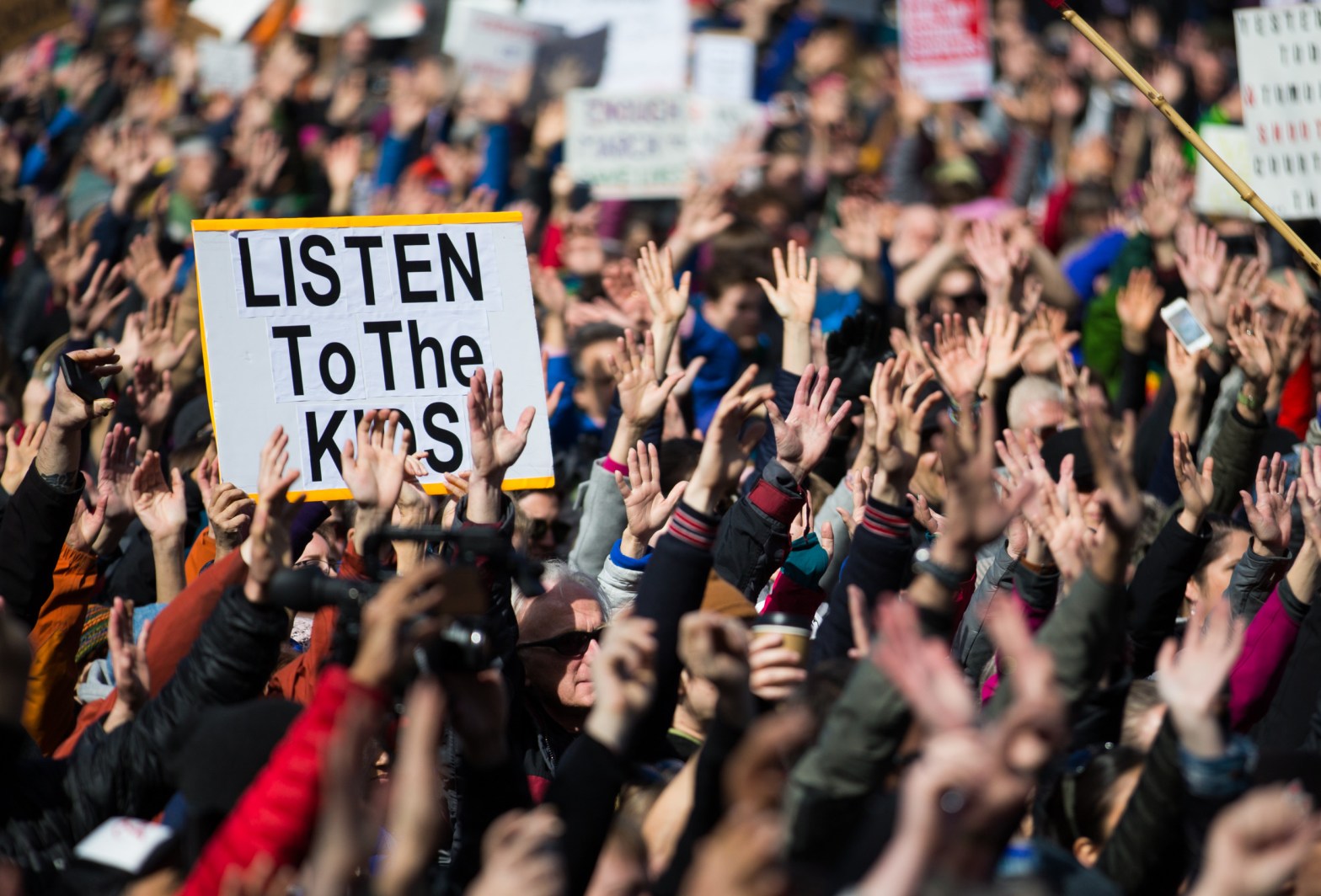
The outburst of digital advancement has certainly enticed society-wide changes that can’t be denied. The exposure associated directly to social media and the digital revolution has certainly helped shape the mindsets and mentalities of youth all around the world, with upright awareness of civics, politics, economics, and general social knowledge this newly found segment of participation-ready generations of youth can’t be further ignored. Accordingly, 16 years old civilians in the United States are granted very generic civic and social rights; for example, they are granted the right to drive, right for marriage, right for discontinuing education and working full-time, right to pay income taxes, right to minimum wage, and right to leave their homes despite their parents’ consent; rights that generally accumulate to almost full social involvement. A claim that excites the articulations of granting their rights to vote and intervene within their right of proper representation.
Studies has asserted that 16 years old civilians, now, have pronounced the same level of understanding of civics to that of 21 years old civilians, while the latter is granted their rights to vote, the earlier still is constrained within old social construction from their right of involvement. Such fact arguably is ironic given that current ongoing changes and political actions aim towards the future, which those 16 years old civilians are to inherit and live within. Studies also show the habitual nature of voting, whereas if voters vote the first time they are eligible, they will persist to vote in all upcoming elections. Furthermore, researches have asserted the likelihood of 16-year-olds to vote rather than 18-year-olds. A claim that further compliments the movement aiming towards granting 16-year-olds the right of voting.
On the other hand, experts assert the counter-argument of letting 16-year-olds vote, expressing their doubtful take on the claim by claiming that the brains of 16-year-olds are still under extreme reconstruction and development in areas that aid in the weighing of certain dilemmas and balance trade-offs. Others generally argue that, with the vast majority of 16-year-olds living in their parents’ homes, their opinion formulating process may be disturbed and influenced by their parents’ opinions, further obstructing the anticipated flow and fairness of elections. Moreover, other claims such lack of knowledge in the field of politics and the initial lack of interest by such age groups are also arguments that can’t be ignored on the take of granting voting rights to 16-year-olds.
The argumentation of 16-year-olds formulating the basis of civic and political understanding can’t be asserted absolute, as further integration of civic and political studies are enticed to be augmented within the educational systems, all in effort to actuate such clause and build founding basis to such claim. Furthermore, the participation of the given age group is not necessarily advised for constructing their own future, as counter-claims assert the age group’s acquired wisdom and knowledge is not sufficient for such process. Regarding the habitual nature of voting, such claim isn’t necessarily true, given that the likelihood of 16-year-olds to vote is based on their constrained right to vote in the first place.
In conclusion, the fact that the youth today are not in any way comparable to the youth 10 years ago can’t be restrained, and the outlook on the general rights granted and social involvement cannot in anyway remain the same; accordingly, the argument of giving the right to vote to 16-year-olds and actuating their efforts to choosing their representation should be further induced within a state’s society and governmental structure, while still further integrating civic and political education within the educational system to ensure the expected knowledge, wisdom, and opinion formulating process is not impaired.
 media7.politics.blog